The Gothic architectural style, with its soaring spires and intricate stonework, stands as a testament to a time when faith met artistry in grand cathedrals and abbeys. This stylistic movement, which emerged in the High Middle Ages, expanded its influence far beyond the ecclesiastical realm, impacting not only architecture but also the cultural and social fabric of Europe. Today, its remnants still evoke awe and admiration, drawing architecture enthusiasts, history buffs, and tourists alike. But what truly defines Gothic architecture, and how did it evolve to such iconic stature?
The Origins of Gothic Architecture
Gothic architecture first emerged in 12th-century France and continued to develop until the 16th century. Driven by advances in engineering, it sought to reach new heights both literally and metaphorically. This was a time marked by a growing sense of national consciousness and the burgeoning power of the Catholic Church, which commissioned these monumental structures. The style is characterized by its ambitious use of vertical space and light—a stark departure from the comparatively stolid Romanesque buildings that preceded it.
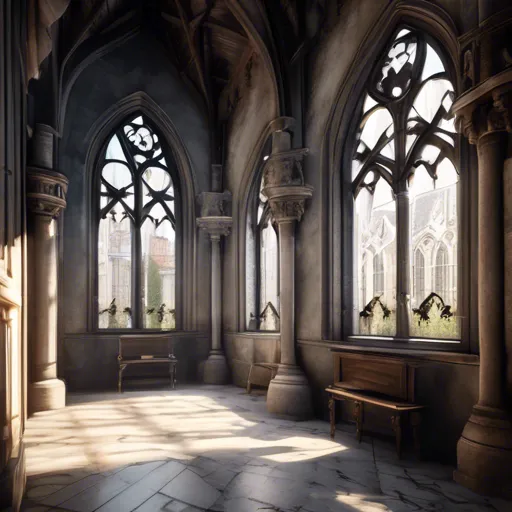
One of the most compelling factors in Gothic architecture’s emergence was the desire to let more light into sacred spaces. Builders achieved this through innovations such as large stained-glass windows supported by flying buttresses, giving structures a luminous interior atmosphere that symbolized the divine. This technology and artistry transformed churches into ethereal spaces that were said to bridge the gap between the heavens and the earth.
The movement wasn’t limited to France. It quickly spread throughout Europe, adapting to different cultural and geographical contexts. England, Italy, Germany, and Spain each developed their own variations of Gothic style. The adaptability of its core features allowed the movement to flourish across diverse regions, often merging with local styles to create unique interpretations of Gothic ideals.
As experts like renowned art historian John Ruskin have noted, Gothic architecture was more than aesthetic; it represented a societal shift. “Every cathedral or abbey,” Ruskin wrote, “is a historical document, a chronicle of the changes in society, economy and imagination through the centuries.”

Key Features of Gothic Architecture
Gothic architecture is renowned for its distinctive and innovative design elements that set it apart from other architectural styles. Among its most identifiable features are:
- Pointed arches, which not only added height but also distributed weight more efficiently.
- Ribbed vaults, which allowed for more complex ceiling designs.
- Flying buttresses, which supported taller and thinner walls, opening the space for large, radiant stained glass windows.
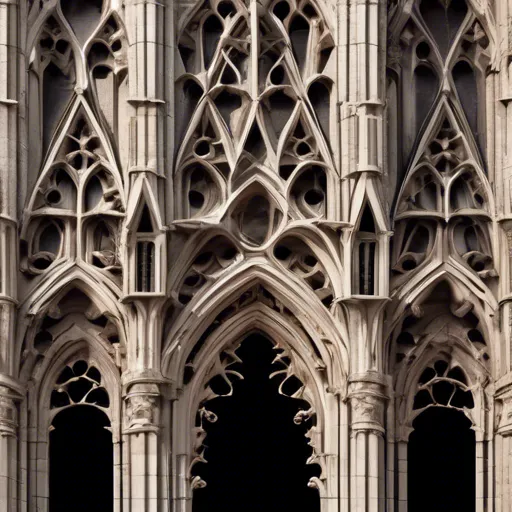
- Ornate tracery, adding an exquisite touch to windows and wall decorations.
The pointed arch itself is a hallmark of Gothic design, a significant departure from the rounded arches of Romanesque architecture. This innovation allowed for much greater flexibility in construction, enabling taller and more stable structures. Coupled with ribbed vaults, these arches redistributed the weight of the roof, reducing the need for thick walls and making space for the iconic expansive windows.
The flying buttress is perhaps the most vivid symbol of Gothic architecture. These external structures played a crucial role in channeling the weight of the roof over and down, circumventing the need for solid interior walls. This adaptation facilitated the installation of vast stained-glass windows, bathing the interiors with multicolored light and imbuing these structures with an almost otherworldly ambiance.
One stellar example of these features is Notre-Dame Cathedral in Paris. Finished in the 14th century, it’s a sublime manifestation of Gothic engineering and artistic elegance. “In Notre-Dame, every stone whispers the devotion and ingenuity of its creators,” notes architect Jean-Marc Caffin, reflecting on its impact across the ages.
Striking Examples of Gothic Architecture
Many of the world’s most iconic structures owe their grandeur to the principles of Gothic architecture. With their breathtaking beauty and historical significance, these structures represent the pinnacle of medieval craftsmanship and spirituality.
The Cathedral of Chartres, situated in France, is a quintessential example of the Gothic style. Not only is it renowned for its sheer size and intricacy, but it also boasts the most complete set of medieval stained-glass windows in the world. These vibrant windows tell biblical stories and depict key local events from the 12th and 13th centuries.
In England, the Westminster Abbey represents Gothic architecture in its storied aisles and soaring ceilings. This site has been the venue for every English coronation since 1066 and houses numerous royal tombs, forever intertwining the Gothic aesthetic with the nation’s storied history.
Milan Cathedral is one of the most intricate, complex and largest Gothic cathedrals in the world, a true masterpiece designed over six centuries with contributions from numerous renowned architects.
Spain’s Burgos Cathedral is another jewel in the Gothic crown. Built over a period exceeding two centuries, its rich embellishments and façade showcase the cultural and architectural exchanges that occurred throughout Europe at this time. Fascinatingly, these architectural marvels didn’t merely stop at temples; they also extended to castles and civic buildings, testifying to the permeating influence of the Gothic style.

The Evolution and Decline
As with any cultural movement, Gothic architecture eventually waned, giving way to new styles and ideas. The Renaissance movement marked a rediscovery of classical ideals and proportions, gradually overshadowing the ornate detail and verticality of the Gothic style.
Nevertheless, the decline did not signal the end of its influence. Gothic Revival architecture emerged in the 18th and 19th centuries, seeing a renewed interest in the Middle Ages and its architectural wonders. Many new buildings were erected during this time that paid homage to Gothic design, blending modern understanding with medieval inspiration.
Prominent examples of Gothic Revival include the Palace of Westminster in London and St. Patrick’s Cathedral in New York, both incorporating Gothic elements such as pointed arches and intricate stone embellishments. These structures underscored a nostalgic turn, an appreciation for the artistry and spirituality of earlier centuries.
- Late Medieval Period: Gothics created complex networks of trade and ideas in Europe.
- Renaissance: Transition towards human-centered design and classical proportions.
- Gothic Revival: Late 18th-century movement revisiting medieval architecture and aesthetics.
For enthusiasts of interior decoration, Gothic Revival also found a home indoors. Rich wooden carvings, pointed arch doorways, and intricately designed window frames became popular choices for those looking to embrace an archaic charm with modern comfort. It’s a style that has never truly disappeared, continually reinvigorating itself in contemporary design spaces.
Tips for Incorporating Gothic Elements
Integrating Gothic elements into modern homes is an inspired way to blend the soulful past with contemporary aesthetics. Opting for high, vaulted ceilings and arched windows can infuse any house with a sense of grandiosity reminiscent of Gothic structures. Attention to detail is paramount; intricate woodwork and stained-glass light fixtures can mimic the ornate beauty of Gothic cathedrals.
When exploring Gothic aesthetics, consider incorporating dark, rich hues like deep reds and purples, which naturally evoke the stateliness of the Middle Ages. These colors can be introduced through upholstery, paint, or even statement rugs and tapestries.
Remember, much like expanding a seemingly small bathroom with expert design ideas (tips for visually enlarging a small bathroom when there is no possibility to expand the space), the trick with Gothic design is in balancing between too much and too little—creating harmony between medieval influences and your modern lifestyle.
Embrace Gothic design through statement pieces that add both drama and a touch of history to any room—be it an aged fireplace mantel or an elaborately carved bookshelf.
- Choose furniture with sculpted details and upholstered finishes.
- Introduce religious iconography tastefully in wall art or decorative elements.
- Use lighting fixtures that mimic the style of medieval chandeliers and lanterns.
Perhaps most importantly, incorporating Gothic elements should honor the style’s reverent history while comfortably inhabiting modern spaces. It’s a balancing act that pays homage to the past and crafts an inviting environment rooted in the robust history of Gothic architecture.
Gothic Architecture’s Place in Contemporary Design
Despite its medieval origins, Gothic architecture’s impact can still be felt in today’s interior and architectural design. While the style may not dominate mainstream architectural trends, it has carved out a niche where its principles of balance, proportion, and ornamentation find fresh expression in modern design.
Interestingly, the integration of classic Gothic features in the layout of contemporary residences is a growing trend. Much like how Characteristics of a kitchen design with parallel furniture arrangement streamline functionality, Gothic principles too, can enhance both form and function.
A crucial aspect of merging Gothic elements in new designs is the selective incorporation of tell-tale Gothic features—think dramatic lighting and pointed archways—into spaces that are otherwise minimalist. This fusion of old and new offers a distinct charm, allowing for innovation without the loss of historical reverence.
“In modern design, we see a resurrection of Gothic influence, not as a disorganized embrace of the past, but a respectful nod towards an architectural language that celebrates both form and detail,” asserts contemporary architect Lina Henriksen.
| Element | Gothic Architecture | Modern Interpretation |
|---|---|---|
| Celebrities | Massive heights, flying buttresses | Open layouts, expansive windows |
| Decorative Elements | Stained glass, elaborate carvings | Sleek metals, decorative glass |
| Overall Style | Monumental, ornate | Minimalist with focal accents |
| Color Palette | Deep, rich tones | Neutral hues with vibrant accents |
Modern Inspirations from the Past
The Gothic architectural style not only tells a story of durability and innovation but also holds lessons for contemporary design. As 10 original ideas for decorating the space above the bed in the bedroom have shown, drawing inspiration from past styles can revitalise existing spaces.
This architectural method is a thriving demonstration of humanity’s constant desire to merge beauty with function, inspiring today’s architects to find moments of creativity within historical contexts. For the home designer, bits of Gothic inspiration can give depth and textural variety to any setting.
Ultimately, whether you’re renovating a grand château or simply redecorating your bedroom, Gothic architecture invites contemplation and admiration. By treating it as a palimpsest—layered with history, emotion, and art—it continues to captivate and inspire, proving once more that the past and present need not be mutually exclusive.
“`html
FAQ
What are the roots of Gothic architecture?
Gothic architecture originated in 12th-century France, following the Romanesque period. It spread across Europe, developing uniquely in different regions over time.
What are unique features of Gothic architecture?
Gothic architecture is characterized by pointed arches, ribbed vaults, and flying buttresses. Stained glass windows and intricate sculptures add to its grandeur.
Which Gothic buildings are noteworthy?
Noteworthy Gothic buildings include Notre-Dame de Paris, Chartres Cathedral, and Cologne Cathedral. These iconic structures showcase the height of Gothic architectural achievement.
Why visit Gothic architecture examples?
Visiting Gothic architecture offers insights into medieval engineering and artistry. These historical structures provide a glimpse into the cultural and religious values of the time.
“`