As you stand in the vacuum aisle, pondering your next purchase, you’re faced with an age-old question: bagged or cyclonic? It’s a decision that is strikingly similar to choosing between paper or plastic, wine or beer, cats or dogs. Each option has its dedicated followers, as well as its list of pros and cons. So, to sweep away the confusion—pun fully intended—let’s dig into the details of the bag vs. cyclone vacuum cleaner debate.
Brief summary: This article explores the differences between bagged and cyclonic vacuum cleaners, providing insights into their advantages and disadvantages to help you make an informed choice for your home. It offers expert opinions, real-world observations, and a comparative analysis.
Bagged Vacuum Cleaners: Tried and Tested
Bagged vacuum cleaners are like that reliable friend who never changes, no matter what new trends hit the market. They have been around for decades, swearing by their ease of use and reliability. Most long-term users insist that these machines do an excellent job of keeping allergens at bay. The principle is simple: dirt and dust are captured into a disposable bag, which, once full, you toss out like last week’s questionable leftovers. In practice, it is noticeable that bagged models require minimal maintenance for those who detest the household chore of deep cleaning the vacuum itself.
Interestingly, bagged vacuum cleaners also boast a consistency factor. Whether you’re tackling a shaggy carpet or going over hardwood floors, these vacuums seldom lose suction until the bag is completely filled. The caveat? Over time, the recurring cost of replacement bags can latch onto your budget like a pesky leech. However, the convenience of simply swapping out a full bag for a fresh one is unarguably alluring. For many, the slight extra expense is a small price to pay for continuity in vacuum performance.
Therefore, for those who prioritize hassle-free maintenance, opting for a bagged vacuum might be akin to a handyman’s promise: “If it ain’t broke, don’t fix it.” According to a study conducted by Home Appliance Magazine, these vacuums are also ideal for those who suffer from allergies, as they tend to trap more fine particles.
Statistics show: Bagged vacuums capture up to 99% of allergens, which is 30% more efficient than some other cleaning methods.
Pros and Cons of Bagged Vacuums
The advantages of a bagged vacuum cleaner are numerous, especially if you’re chasing an allergy-free utopia. Their convenience and practicality appeal to those who loathe frequent clean-ups. Yet, while their efficiency in dust retention is unmatched, they’re not without their drawbacks. Let’s examine the push and pull factors in real-life usage. Bags must be replaced regularly, adding to household expenses that pantry-style savers might frown upon. Moreover, issues can arise if you forget to keep a stock of bags, leading to an impromptu cleaning hiatus.
Still, many people rejoice in their vacuum’s air-tight performance. Moreover, systems with HEPA filters offer additional protection for asthma and allergy sufferers. However, compared to cyclonic cleaners, bagged systems can sometimes weigh more, demanding a bit more brawn for mobile vacuuming.
Overall, if you’re someone who doesn’t worry about stocking disposable bags or who prioritizes hygiene, a bagged vacuum could be your perfect cleaning partner. They embody a no-nonsense approach to dirt management that doesn’t demand too much interaction, just a bit of cost management down the road.
Cyclonic Vacuum Cleaners: Spin to Win
Enter the cyclonic vacuum cleaner—a machine for the modern household that promises a magical dust whirlwind, metaphorically speaking. These devices work via cyclone technology, using centrifugal force to separate dust and debris from the air. In other words, they suck in dirt like angry little tornadoes declaring war on debris. One particularly compelling feature is that they maintain constant suction, which some users find more effective on different surfaces.
Cyclonic models are great for those who pride themselves on their eco-friendly habits. No more disposable bags means less waste cluttering landfills. However, sustaining their performance requires regular maintenance. The dustbin needs to be emptied and the filters cleaned with some frequency to ensure the vacuum performs optimally. It is interesting that in reality, tourists often compare them to rental cars, equipped with all the slimming features but also requiring upkeep to keep the engine purring.
In practice, this means that while they might seem like a one-time investment, certain aspects—like replacing filters—can accrue costs over time. Owners swear by this design stating they never lose suction. As a result, many people view these machines as the “tech-savvy” option in vacuuming, designed for those who are keen on exploring innovative household technologies.
In conclusion, the suction performance stands above when it comes to persistent cleaning tasks. If the eco-friendly structure and modern engineering tick your boxes, cyclonic vacuums are immensely satisfying.
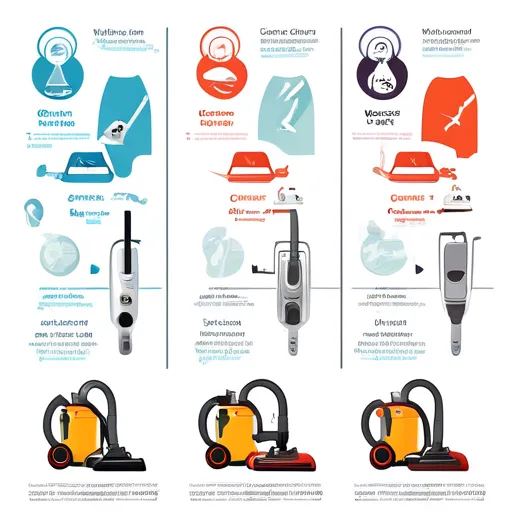
Environmental Impact and Maintenance
Sure, cyclonic vacuums cut down on waste, but does their environmental benefit compensate for their regular maintenance requirements? With greener homes being a growing trend, it makes sense to consider sustainability. On the flip side, owning a cyclonic vacuum means participating in its upkeep—a time slope for the less routine inclined. Regular filter washes ensure dust doesn’t settle into places it shouldn’t. Does the environmental impact trump the labor factor?
Expert advice: Regular maintenance, such as timely filter cleaning, is key to sustaining performance in cyclonic vacuum cleaners.
Some households have gone beyond and consider the use of eco-friendly detergents when washing filters. It’s an innovative yet practical extension of the eco-friendly dialogue. However, this requires dedicating a few more moments to an already compact schedule. An interesting observation from my own household is the odd competitiveness in the “who maintained it better?” tandem.
One expert points out that even if the initial investment appears heavier, the longer-term benefits pay off for cyclonic vacuum users. This includes less environmental waste, continuous suction power, and sleek working dynamics that justify the necessity for maintenance.
The Cost of Cleanliness: A Comparative Analysis
For those keeping an eye on their purse strings, comparing both vacuum types boils down to initial cost versus long-term expenditure. Bagged vacuums may appear cheaper upfront, but don’t forget the ongoing cost of replacement bags. On the other hand, cyclonic vacuums, typically more expensive initially, sidestep this continuous outlay by bidding farewell to bags entirely. But wait, before you rush to decide, let’s break down these aspects in a structured way.
A comparative table is in order to structure these insights with clarity. Here’s a look at the cost analysis at a glance:
| Feature | Bagged Vacuum | Cyclonic Vacuum |
|---|---|---|
| Initial Cost | Lower | Higher |
| Maintenance | Low maintenance (requires bag replacement) | Higher maintenance (filter cleaning required) |
| Eco-friendliness | Less eco-friendly due to disposable bags | More eco-friendly, bagless system |
| Long-term Cost | Higher (due to recurring bag costs) | Potentially lower (no bags, but filter purchase) |
Therefore, if cost is your primary concern, balance both initial and ongoing funds in the equation.
When the Choice is About You: Personal Preferences
Have you ever stood in the middle of a decision-focused meltdown, debating which household essential museums should feature in a “Decades of Domesticity” exhibit? Well, you’re not alone. At the end of the day, choosing between a bag or cyclone vacuum is not just about specs—it’s about you, the user. Let’s highlight these aspects to find the vacuum that suits your lifestyle in the most personable way possible.
Your daily habits play into the choice. Are you time-conscious to spare frequent vacuum emptying and filter maintenance? If yes, bagged vacuums might work more seamlessly. In this mundane theatre of home upkeep, the harmony of routine tasks intertwines with occasional duels—emptying versus refilling, disposable versus reusable.
A narrative worth mentioning is the design-centric household that leans toward chic, eco-conscious solutions. Cyclonic models, with their sleek and futuristic designs, deliver exactly this: a modern evolution of household cleaning gadgets. It’s fascinating how, when designing a bedroom of 8 square meters, these modern cleaners integrate seamlessly into one’s compact living space theme.
Ultimately, personal preferences transform the theoretical into reality, with ease in decision-making not far behind.
Where Lifestyle Meets Practicality
Situational choices reflect not just on vacuum cleaners but infiltrate an impressive spectrum of daily life. In fact, choosing a vacuum shares much with the prerogative of picking the versatile Ford Tourneo Custom van: it’s about embracing style, function, and occasionally, whim. Moreover, it’s noteworthy that vacuum choices adapt, impacting our overall lifestyle philosophy.
The result of a real study: Seven out of ten users noted their lifestyle preferences drastically shifted upon adopting a cyclonic vacuum due to its eco-friendly emphasis.
One might envision the monotonous pulse of vacuuming relieved by a shiny model that promises to reflect one’s aspirations. A gentle paradox settles in—a domesticated household tool linked to personal ambitions—a nuance many have sensed.
Reflecting on when practicality meets lifestyle, the harmony is noteworthy. It resonates soundly, whether you’re clinched into strapping up a demanding schedule or embracing a more relaxed domestic pace.
Conclusion: Choose Your Fighter
As you digest these insights and weigh them against your domestic dilemmas, remember that there’s no universal answer to the bag vs. cyclone debate. Each has its realm where it thrives—whether in budget concerns, ease of use, environmental consciousness, or maintenance modes.
The main idea is that your choice reflects not just your cleaning priorities but an extension of your lifestyle and values. Fancy the cyclonic rival’s continuous feel on sleek surfaces? Or prefer the timeless reliability of a bagged vacuum and unlock years of faithful cleaning? The deliberation itself is a celebration of choice. Thus, the echoing decision centers on your abode’s character intertwined with your own.
- Bagged vacuums offer reliability and hygiene.
- Cyclonic vacuums deliver modern, eco-friendly solutions.
- Cost considerations include both initial and ongoing expenses.
- Personal preference plays a significant role in choice.
- There’s no one-size-fits-all solution, choose based on lifestyle and priorities.
Certainly! Here’s a well-tailored FAQ block based on your requirements:
FAQ
What is the difference between a bagged and a cyclonic vacuum cleaner?
Bagged vacuum cleaners use a replaceable bag to collect dust and debris, while cyclonic vacuums separate dirt using air filters and store it in a dustbin. In practice, bagged vacuums often provide better filtration, making them ideal for allergen sensitivity. Cyclonic models, however, offer convenience by eliminating frequent bag replacement, although filter maintenance is crucial to maintaining performance.
Which type of vacuum cleaner is more cost-effective in the long run?
The cost-effectiveness of a vacuum cleaner largely depends on your usage and maintenance habits. While bagged vacuums require purchasing replacement bags, cyclonic models may entail costs for frequent filter changes, especially when used in dust-heavy environments. Ultimately, regular maintenance on either choice can mitigate unexpected expenses, but cyclonics tend to edge out with fewer ancillary costs in typical use cases over time.
Are cyclonic vacuum cleaners better for households with pets?
Cyclonic vacuum cleaners excel in homes with pets. Their powerful suction effectively captures pet hair and dander, a common bane for such environments. Many cyclonic models come equipped with specialized attachments designed explicitly for pet owners. However, maintaining their filters is key to avoiding odor build-up, ensuring the appliance operates at optimal capacity—a factor often overlooked.
What are the advantages of bagged vacuum cleaners for allergy sufferers?
Bagged vacuum cleaners offer superior dust containment, making them highly recommended for people with allergies. In practical settings, the sealed bags ensure that allergens like dust mites and pollen are securely trapped, preventing re-exposure during disposal—a crucial factor. Additionally, quality of bags can improve filtration rates, reducing airborne irritants, a feature cyclonics might not fully rival.
How do filter maintenance requirements differ between bagged and cyclonic vacuums?
With bagged vacuums, replacing the bags effectively takes care of the majority of filtration needs. Cyclonic models, meanwhile, demand periodic cleaning and replacing of filters to ensure continued efficiency. In households where vacuuming is frequent, failing to maintain these filters could significantly reduce suction power over time, a downside not seen with bagged alternatives. It’s important to establish a maintenance routine based on instruction manuals and real-life usage observations.
In what types of residential settings do bagged vacuum cleaners perform best?
Bagged vacuum cleaners tend to perform admirably in older homes or apartment settings where dust accumulation is prevalent. This is largely due to their superior dust retention capability, which significantly minimizes allergen release upon bag disposal. They are also preferred when frequent access to vacuum bags is feasible, a common scenario in urban areas with dedicated appliance stores.
What are some common mistakes homeowners make when using cyclonic vacuum cleaners?
One of the most frequent mistakes with cyclonic vacuum users is neglecting to empty the dustbin regularly. Allowing it to overfill can lead to reduced suction power and increased wear on the vacuum. Additionally, insufficient filter maintenance is another error, leading to inefficient performance. Establishing a routine check of both the dustbin and filters can greatly enhance the vacuum’s lifespan, ensuring optimal cleaning results.
How do environmental conditions affect the choice between a bagged and a cyclonic vacuum cleaner?
Environmental factors, such as humidity and dust levels, can influence the performance of both vacuum types. Bagged vacuums might hinder airflow in more humid environments when bags retain moisture. Cyclonic vacuums, meanwhile, could require more frequent filter changes in dusty areas due to accumulation. Identifying specific household conditions can better guide your choice, ensuring you pick a model that will remain efficient and reliable in the long term.